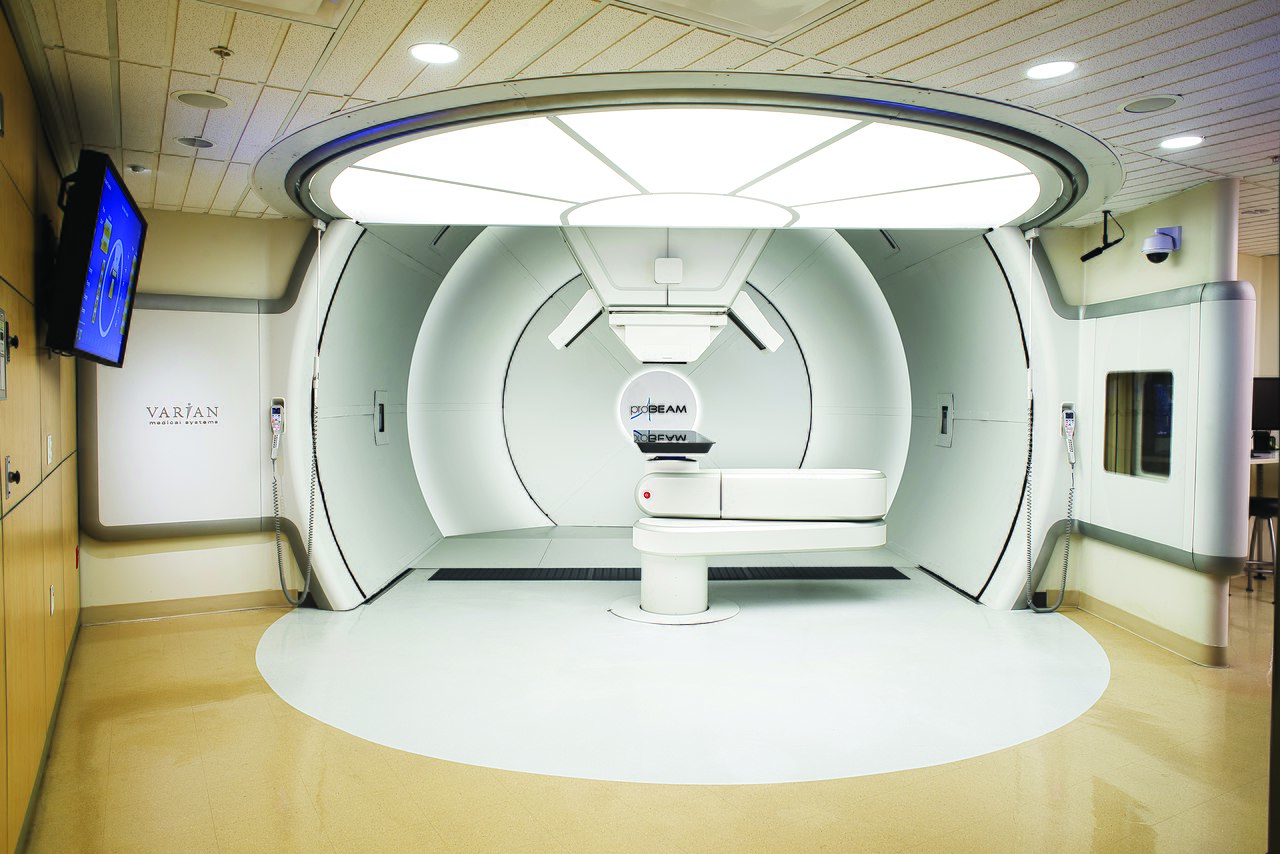
China has become the fastest-growing market for proton and heavy ion therapy in the world. With over 30 facilities operational or under construction — more than half of all new particle therapy projects globally — it now rivals Japan, the United States, and Germany in advanced cancer treatment technology.
For international patients, this means access to world-class proton and carbon ion therapy at a fraction of Western costs, with clinical outcomes that match or exceed global benchmarks.
What Is Proton Therapy?
Proton therapy uses proton beams instead of conventional X-rays to destroy tumors. Its key advantage is the Bragg Peak: protons deposit maximum energy at a precise depth, then stop — unlike X-rays, which pass through the body and damage healthy tissue along the way.
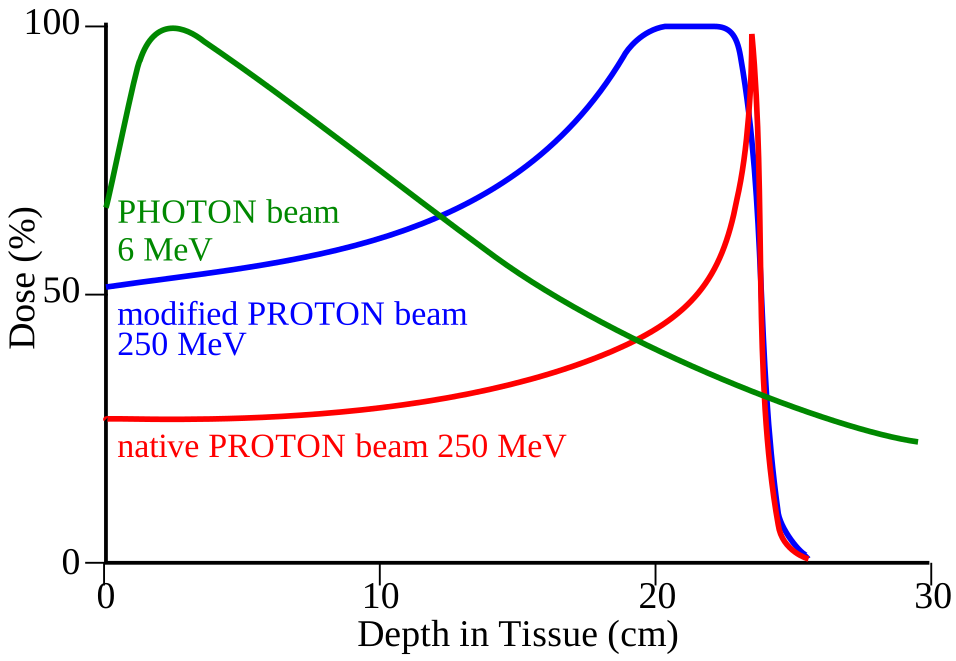
This precision is critical when tumors sit near the brain, spinal cord, eyes, heart, or developing organs in children.
Proton vs. Heavy Ion (Carbon Ion) Therapy
- Proton therapy — uses hydrogen ions; well-established for many tumor types
- Carbon ion therapy — uses heavier carbon ions with higher tumor-killing power; especially effective against radiation-resistant cancers that don't respond to conventional treatment
Only a handful of centers worldwide offer both. China's Shanghai Proton and Heavy Ion Center (SPHIC) was the third facility globally to provide both modalities.
Which Cancers Benefit Most?
| Cancer Type | Why Proton Therapy Excels |
|---|---|
| Pediatric cancers (brain tumors, neuroblastoma) | Reduces developmental side effects and secondary cancer risk |
| Head and neck cancers (nasopharyngeal, skull base) | Protects brain, hearing, salivary glands |
| Skull base tumors (chordoma, chondrosarcoma) | Gold standard treatment |
| Prostate cancer | Comparable to surgery, fewer side effects |
| Liver cancer (HCC) | Non-invasive option for non-surgical candidates |
| Early-stage lung cancer | High cure rates, minimal toxicity |
| Eye tumors (uveal melanoma) | Preserves vision |
Emerging with carbon ion: Locally advanced pancreatic cancer (median survival 29.6 months at SPHIC vs. 12–18 months with chemo), recurrent head/neck sarcomas (1-year survival 95.9%).
Not recommended for: blood cancers, widely metastatic disease, or cancers where conventional radiation works equally well.
Shanghai Proton and Heavy Ion Center (SPHIC)
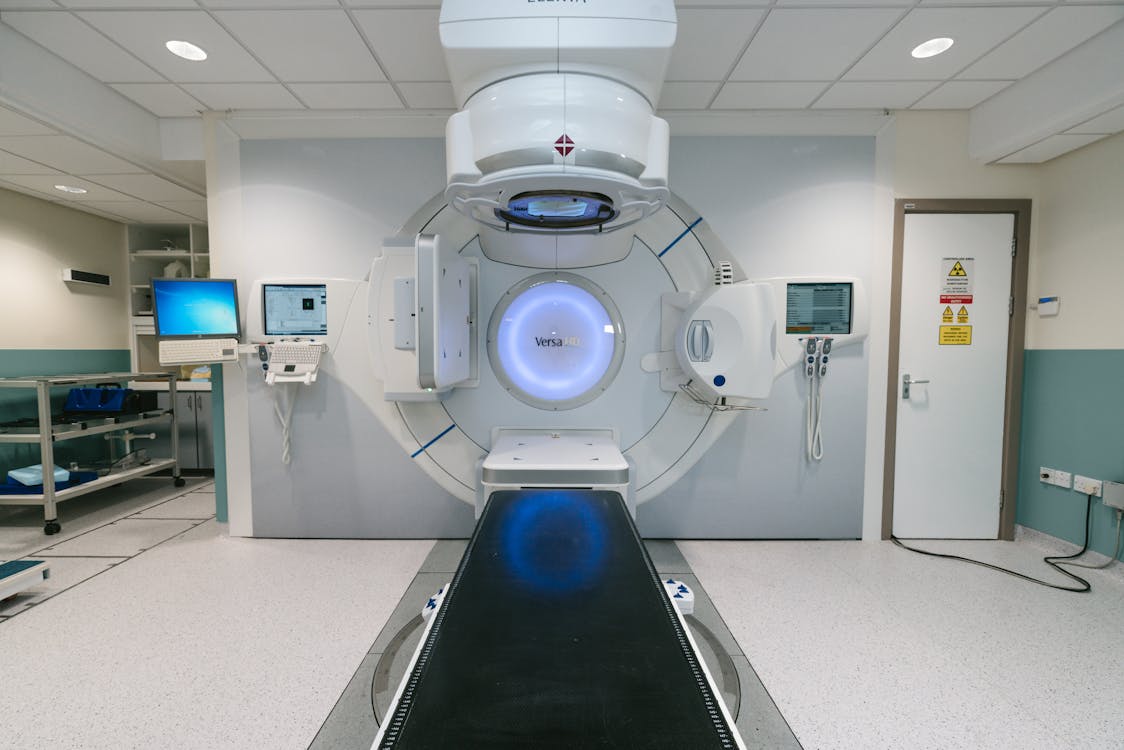
SPHIC is China's flagship particle therapy facility and one of the most experienced in Asia.
| Location | Pudong, Shanghai |
| Equipment | Siemens IONTRIS — proton + carbon ion |
| Affiliation | Fudan University Shanghai Cancer Center |
| Patients treated | ~8,900 (as of Jan 2026) |
| Annual throughput | 1,267 in 2025 — first center worldwide to exceed 1,000/year for 4 consecutive years on a single device |
| Languages | 16, including English and Japanese |
| Expansion | Phase II approved Dec 2025 — will become the world's largest particle therapy facility |
Published Clinical Outcomes
| Cancer Type | Outcome |
|---|---|
| Nasopharyngeal carcinoma | 5-year survival: 92.9% |
| Prostate cancer (154 patients) | 3-year survival: 100%; biochemical control: 93% |
| Skull base chordoma | 2-year survival: 93.8% |
| Salivary gland carcinoma (82 patients) | 3-year survival: 94.3%; local control: 97.2% |
| Early-stage lung cancer | 5-year survival: 70.3%; near-zero severe toxicity |
| Pancreatic cancer (carbon ion) | Median survival: 29.6 months |
| Liver cancer (non-surgical) | 3-year survival: 75.4% |
Sources: Frontiers in Oncology (2026), PMC, MDPI Cancers (2023)
Other Notable Centers
| Center | Location | Notes |
|---|---|---|
| Wanjie Proton Center | Zibo, Shandong | China's first (2004) |
| Ruijin Hospital | Shanghai | First domestic proton system; ~$23,000/course |
| Guangzhou Concord Cancer Center | Guangzhou | Opened 2025, led by former SPHIC director |
| Zhejiang Cancer Hospital | Hangzhou | Carbon ion therapy (2025) |
By 2030, China is projected to have 60+ operational facilities.
Cost Comparison

| Country | Full-Course Cost (USD) | Notes |
|---|---|---|
| China | $30,000 – $55,000 | SPHIC ~$45K–$55K; Ruijin ~$23K |
| United States | $100,000 – $200,000 | Limited insurance coverage |
| Japan | $20,000 – $30,000 | Some cancers covered by insurance |
| Germany | $50,000 – $85,000 | |
| India | $25,000 – $45,000 | Few facilities |
Why China is affordable: Government price caps on public hospitals, high patient volume (1,200+/year at SPHIC), and domestically manufactured equipment (Ruijin's system costs roughly half of imported alternatives).
Additional costs to budget: accommodation ($50–$150/night), travel, and follow-up imaging.
Treatment Process: What to Expect
Phase 1: Remote Consultation (1–2 weeks before arrival)
Submit medical records and imaging for eligibility assessment. If appropriate, you'll receive a treatment plan and cost estimate.
Phase 2: On-Site Planning (1–2 weeks)
CT/MRI simulation, custom immobilization device fabrication, and treatment plan optimization.
Phase 3: Daily Treatment (3–7 weeks)
One session per day (Mon–Fri), lasting 15–30 minutes. Actual beam delivery takes just 1–3 minutes. Side effects are generally mild (skin irritation, fatigue).
| Cancer Type | Sessions | Duration |
|---|---|---|
| Liver cancer | 10–16 | 2–3 weeks |
| Prostate cancer | 16–24 | 3–5 weeks |
| Head/neck cancers | 22–33 | 5–7 weeks |
Total time in China: 5–9 weeks.
For Japanese Patients: 日本の患者さまへ
Japan leads the world in particle therapy with 20+ facilities. However, China may be the better option when:
- Insurance doesn't cover your indication — Japan covers proton therapy for select cancers, but many remain out-of-pocket
- Long wait times at Japanese centers (months) vs. faster access at SPHIC
- Carbon ion for specific cancers — SPHIC's published outcomes for recurrent sarcomas and salivary gland tumors
- Shanghai is 2–3 hours from major Japanese cities; SPHIC offers Japanese-language support
If your cancer is covered by Japanese insurance, treat in Japan. For non-covered indications or carbon ion therapy with shorter wait times, China is worth considering.
How to Get Started

- Prepare medical records — recent imaging (CT, MRI, PET-CT), pathology reports, treatment history
- Submit for evaluation — directly to the center or through OriEast for coordinated assessment
- Receive treatment plan — with estimated duration, costs, and protocol
- Arrange travel — most nationalities can enter China visa-free for 15–30 days
- Begin treatment — arrive 1–2 weeks early for planning scans
- Follow-up at home — complete records provided to your local oncologist
OriEast coordinates the full process for international patients: medical record translation, appointment scheduling, accommodation, and on-site interpretation. Request a free consultation →
FAQ
Is proton therapy painful? No. The beam is painless. Common side effects are mild skin irritation and fatigue.
Can I get proton therapy after conventional radiation? In some cases, yes — especially carbon ion therapy for recurrent tumors.
Does SPHIC accept international patients? Yes, with support in 16 languages. It's affiliated with Fudan University Shanghai Cancer Center.
This article is for informational purposes only and does not constitute medical advice. Clinical outcomes cited are from peer-reviewed studies; individual results may vary.
Sources: SPHIC institutional data, Frontiers in Oncology (2026), PMC/PubMed, PTCOG facility directory.