Chronic pain is one of the most widespread health problems in the world. According to the World Health Organization, approximately 1.5 billion people suffer from chronic pain globally, with lower back pain being the leading cause of disability. In the United States alone, over 50 million adults experience chronic pain, costing an estimated $635 billion annually in healthcare expenses and lost productivity.
Yet Western medicine's approach to chronic pain has long faced serious limitations. Long-term use of NSAIDs carries gastrointestinal and cardiovascular risks. The opioid crisis has become a public health catastrophe. Surgical interventions offer limited relief for many chronic pain patients. Increasingly, both patients and clinicians are turning to Traditional Chinese Medicine (TCM) — a medical system with over 2,500 years of experience in pain management.
This guide covers TCM's core methods for treating chronic pain, the clinical evidence behind them, which conditions respond best, and how costs compare — so you can decide whether TCM belongs in your pain management plan.
How TCM Understands Chronic Pain
Western medicine views pain as the result of nerve signal transmission, focusing treatment on blocking pain signals or eliminating inflammation. TCM takes a different perspective — pain is understood through the principle of "where there is blockage, there is pain; where there is deficiency, there is pain" (不通则痛,不荣则痛). In other words, pain arises when qi and blood circulation is obstructed or when organs fail to adequately nourish local tissues.
This isn't just a philosophical difference. It directly shapes treatment strategy: TCM addresses not only the pain site itself but the systemic imbalances causing it. A patient with lower back pain might be assessed for kidney qi deficiency, cold-damp invasion, or emotional factors contributing to muscle tension — and receive a treatment plan targeting the root cause rather than just the symptom.
TCM Pain Classification
TCM classifies chronic pain by its underlying pathological mechanism, with different treatment strategies for each type:
| Pain Type | Characteristics | Common Presentations | Treatment Principle |
|---|---|---|---|
| Qi stagnation & blood stasis | Stabbing, fixed location, worse with pressure | Post-injury pain, surgical adhesions | Move blood, resolve stasis, relieve pain |
| Cold-damp obstruction | Cold, heavy sensation, worse in cold weather | Arthritis, rainy-weather back pain | Warm channels, dispel cold and dampness |
| Damp-heat accumulation | Burning, swelling, local heat | Acute gout, active rheumatoid arthritis | Clear heat, resolve dampness |
| Liver-kidney deficiency | Dull ache, weakness, worse with fatigue | Degenerative joint disease, elderly back/knee pain | Nourish liver and kidney, strengthen sinews |
| Qi-blood deficiency | Lingering pain, pallor, fatigue | Postpartum pain, chronic illness | Tonify qi and blood, nourish channels |
This precise classification means that even identical pain locations may receive entirely different treatment plans for different patients. This is the core advantage of TCM's individualized approach.
Core TCM Methods for Chronic Pain
TCM doesn't rely on a single modality. Instead, practitioners combine multiple therapies based on each patient's specific condition. Here are the five most commonly used approaches.
Acupuncture: The Most Evidence-Backed TCM Pain Treatment
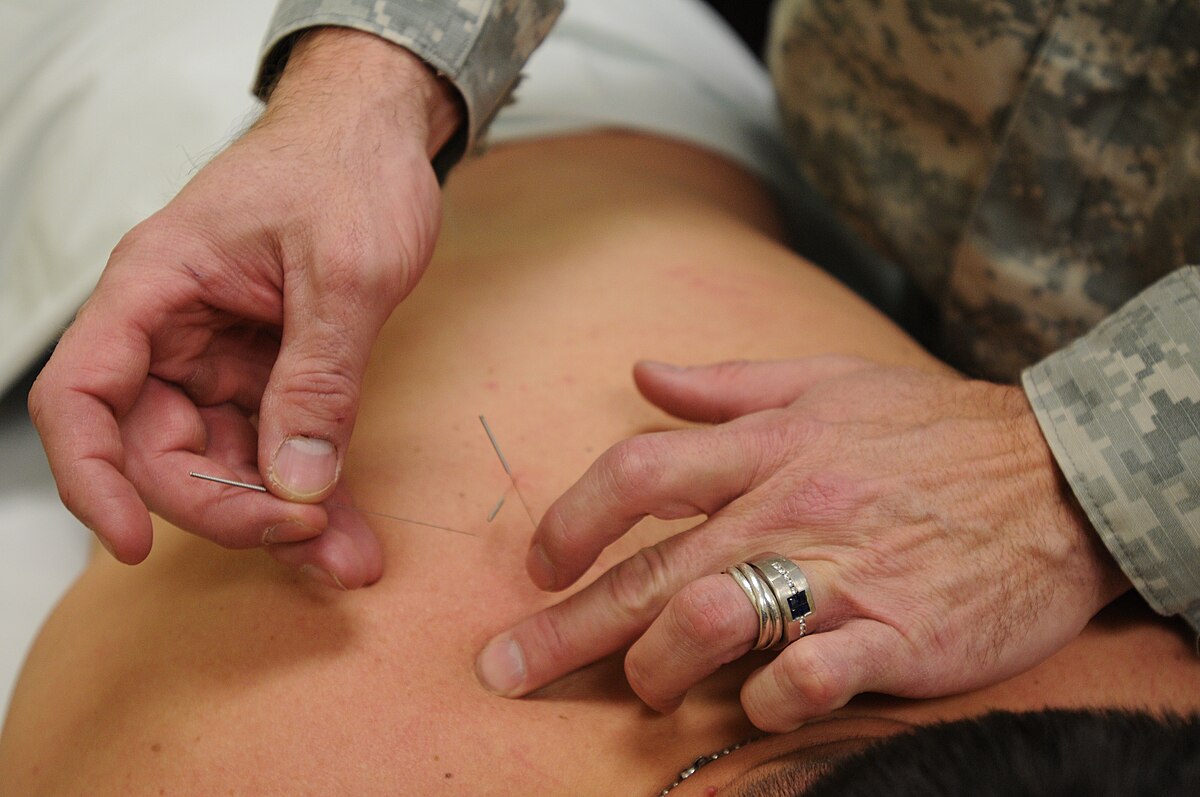
Acupuncture is the most extensively researched therapy in TCM pain management. By inserting ultra-fine needles into specific acupoints, acupuncture can:
- Stimulate the release of endorphins and enkephalins — the body's natural painkillers
- Modulate pain signal transmission at the spinal dorsal horn
- Reduce pro-inflammatory cytokine levels, decreasing chronic inflammation
- Activate the descending pain inhibition system
An updated meta-analysis published in JAMA Internal Medicine in 2018, pooling data from 39 randomized controlled trials with over 20,000 patients, confirmed that acupuncture has definitive efficacy for chronic musculoskeletal pain, headaches, and osteoarthritis — and that effects persist 12 months after treatment ends (Vickers et al., 2018).
For different types of chronic pain, acupoint selection and needling techniques vary. For example, sciatica from lumbar disc herniation typically involves points like Huantiao (GB30), Weizhong (BL40), and Yanglingquan (GB34), often combined with electroacupuncture. Migraines, on the other hand, commonly use Taiyang (EX-HN5), Fengchi (GB20), and Hegu (LI4).
For a deeper dive into acupuncture's science and treatment process, see our Complete Guide to Acupuncture Therapy.
Chinese Herbal Medicine: A Systemic Approach
Herbal medicine is an essential component of TCM pain management. Unlike Western drugs that target a single pathway, Chinese herbal formulas typically contain multiple herbs working synergistically across multiple targets and pathways to relieve pain while addressing the underlying pathology.
Commonly used pain management formulas include:
- Du Huo Ji Sheng Tang — treats lower back and knee pain from liver-kidney deficiency with wind-cold-damp; modern pharmacological research confirms its anti-inflammatory, analgesic, and microcirculation-improving effects
- Shen Tong Zhu Yu Tang — moves blood and resolves stasis for widespread body pain from blood stasis
- Gui Zhi Shao Yao Zhi Mu Tang — from the Jin Gui Yao Lue (Essential Prescriptions of the Golden Cabinet), used for joint swelling and pain in rheumatoid arthritis
- Bu Yang Huan Wu Tang — tonifies qi and moves blood through the channels, used for post-stroke sequelae and neuropathic pain
Modern TCM practice has also innovated delivery methods beyond traditional decoctions: concentrated herbal granules, topical herbal patches, herbal fumigation, and iontophoresis have all improved convenience and compliance.
It's important to note that herbal prescriptions must be formulated by qualified TCM practitioners based on individual diagnosis. Self-prescribing carries safety risks, especially when combined with Western medications.
Tuina: Chinese Manual Therapy
Tuina is TCM's unique manual therapy system, fundamentally different from Western massage. Tuina practitioners use dozens of specialized techniques — rolling, pressing, kneading, grasping, point-pressing, and plucking — applied to meridian points and myofascial structures to unblock channels, harmonize qi and blood, and release adhesions.
Tuina is particularly effective for:
- Cervical spondylosis — releasing neck muscle groups and adjusting facet joint dysfunction to relieve neck pain and radiating arm pain
- Lumbar muscle strain — relaxing spasmed back muscles and improving local circulation
- Frozen shoulder — restoring range of motion through passive movement and manual release
- Knee osteoarthritis — improving periarticular soft tissue condition, reducing pain and stiffness
In China's top-tier hospitals, tuina is an independent clinical department, and tuina practitioners must complete five-year university TCM education and pass the national medical licensing exam. This is fundamentally different from countries where massage is classified as a wellness service.
Cupping & Gua Sha: Complementary Therapies
Cupping and gua sha are commonly used adjuncts in TCM pain management.
Cupping creates negative pressure on the skin surface, promoting local blood circulation, releasing fascial adhesions, and relieving muscle tension. A 2018 systematic review in Evidence-Based Complementary and Alternative Medicine found that cupping has short-term analgesic effects for chronic neck and back pain (Kim et al., 2018).
Gua sha uses a smooth-edged tool to scrape oiled skin repeatedly, producing localized petechiae ("sha") to promote microcirculation and reduce inflammation. Research shows gua sha can significantly lower inflammatory marker levels in local tissues.
These therapies are typically used as supplements to acupuncture or tuina rather than standalone treatments.
Moxibustion: Heat Therapy
Moxibustion uses burning mugwort (Artemisia argyi) to apply heat stimulation to acupoints. It's particularly suited for cold-damp type chronic pain — joint pain that worsens in rainy weather, back pain accompanied by cold sensitivity, and similar presentations.
Modern research has found that moxibustion's thermal stimulation activates transient receptor potential (TRP) ion channels, modulates local immune responses, and promotes tissue repair through heat shock protein expression. For knee osteoarthritis, a 2017 Cochrane review concluded that moxibustion may be effective but requires more high-quality studies to confirm (Song et al., 2017).
Which Chronic Pain Conditions Respond Best to TCM?
Based on current clinical evidence and real-world experience from Chinese hospitals, here's how TCM performs across different chronic pain conditions.
Strong Evidence (Grade A)
- Chronic lower back pain — Acupuncture is recommended as a first-line non-pharmacological treatment by the American College of Physicians (Qaseem et al., 2017)
- Knee osteoarthritis — Acupuncture combined with topical herbal medicine has shown superiority over Western medication alone in multiple large RCTs
- Chronic neck pain — Acupuncture plus tuina showed excellent results in large German pragmatic trials
- Tension headaches & migraines — Cochrane reviews confirm acupuncture is at least as effective as preventive medication for migraine
Moderate Evidence (Grade B)
- Fibromyalgia — Acupuncture improves pain scores and quality of life, though optimal protocols are not yet standardized
- Rheumatoid arthritis — Chinese herbal medicine combined with Western drugs can improve remission rates and reduce Western drug dosages
- Sciatica — Electroacupuncture has clear short-term analgesic effects for radicular pain
- Frozen shoulder — Tuina plus acupuncture outperforms physiotherapy alone in restoring range of motion
Preliminary Evidence (Grade C)
- Complex regional pain syndrome (CRPS) — Case reports and small studies show promise for integrative TCM treatment
- Cancer pain — Acupuncture as an adjunct can reduce opioid requirements and improve quality of life
- Chronic post-surgical pain — Perioperative acupuncture may reduce the incidence of chronic post-surgical pain

TCM vs Western Medicine: Different Paths to Pain Management
Understanding the differences between TCM and Western approaches helps you make more informed treatment decisions.
| Dimension | Western Pain Management | TCM Pain Management |
|---|---|---|
| Diagnosis | Imaging, lab tests | Four examinations + modern diagnostics |
| Treatment goal | Block pain signals, eliminate inflammation | Restore qi-blood balance, address root cause |
| Primary methods | Medications, injections, surgery | Acupuncture, herbs, tuina, integrative therapies |
| Individualization | Treatment by diagnosis category | Same disease, different treatments |
| Side effects | GI damage, addiction risk, surgical complications | Minimal — occasional mild bruising or fatigue |
| Onset speed | Medications act quickly | Some therapies require cumulative sessions |
| Long-term effects | Symptoms often return after stopping medication | Treatment effects tend to persist longer |
| Cost | High for long-term medication and surgery | Relatively economical |
Importantly, TCM and Western medicine are not adversaries. In China's top hospitals, integrative treatment for chronic pain is the mainstream approach. For example, a patient with lumbar disc herniation might simultaneously receive:
- Western MRI for precise diagnosis and minimally invasive surgery if needed
- Acupuncture and electroacupuncture for pain and muscle spasm relief
- Herbal medicine to improve local circulation and promote tissue repair
- Tuina to release soft tissue adhesions
- Guided exercise therapy to prevent recurrence
This integrative model is a unique advantage of China's healthcare system and a key reason international patients increasingly choose to come to China for chronic pain treatment. Learn more in our Complete Guide to Medical Tourism in China.
Cost Comparison: TCM Pain Treatment
For international patients, cost is a major factor in choosing where to seek treatment. TCM treatment in China offers significant savings compared to Western countries.
| Treatment | US Cost | China Cost (Top Hospital) | Savings |
|---|---|---|---|
| Acupuncture (single session) | $75–$200 | $15–$50 | 70–85% |
| Acupuncture course (10 sessions) | $750–$2,000 | $150–$500 | 75–80% |
| Herbal medicine (monthly) | $50–$150 | $20–$60 | 60–70% |
| Tuina (single session) | $80–$150 | $15–$40 | 75–80% |
| Comprehensive pain program (4 weeks) | $3,000–$8,000 | $800–$2,000 | 70–80% |
Consider a chronic back pain patient: in the US, a 4-week program including 12 acupuncture sessions, physical therapy, and pain specialist consultations might cost $5,000–$8,000 without insurance. At a top Shanghai hospital, an equivalent or more comprehensive integrative program — including acupuncture, herbal medicine, tuina, physiotherapy, and specialist consultations — typically costs $1,000–$2,500.
Even factoring in flights and accommodation, many patients find that completing a full treatment course in Shanghai costs less than treatment at home.
To explore specific service packages and pricing, visit our Services page or contact us for a personalized quote.
Getting TCM Pain Treatment in Shanghai: The Process
If you're considering TCM pain treatment in Shanghai, here's what the typical journey looks like.
Step 1: Initial Consultation & Assessment
Submit your medical records and pain description through OriEast. Our medical team will recommend the most suitable hospital and department, provide a preliminary treatment plan, and give you a cost estimate.
Step 2: Booking & Travel Arrangements
Once the treatment plan is confirmed, we book appointments with top TCM pain specialists in Shanghai and assist with visa arrangements (if needed), accommodation, and transportation. For patients requiring a medical visa, see our Visa Guide.
Step 3: Hospital Visit
Upon arrival in Shanghai, an OriEast bilingual medical coordinator accompanies you throughout. The initial visit typically includes:
- TCM four examinations (observation, listening, inquiry, palpation)
- Necessary modern diagnostics (MRI, X-ray, blood tests)
- Joint TCM-Western medicine specialist consultation
- Personalized treatment plan development
Step 4: Treatment
Depending on your condition, treatment typically spans 2–6 weeks. In China, acupuncture is often administered daily in intensive courses (10 days per course) — far more frequent than the once-weekly sessions common in Western countries, significantly accelerating recovery.
A typical daily treatment schedule might include:
- Morning: Acupuncture + electroacupuncture (30–45 minutes)
- Afternoon: Tuina manual therapy (30 minutes) + herbal fumigation or cupping
- Daily: Herbal medicine (decoction or granules)
- Regular: Specialist follow-up to assess progress
Step 5: Discharge & Ongoing Management
At the end of treatment, your physician provides detailed discharge instructions including:
- Take-home herbal prescriptions (usually in granule form for easy transport)
- Exercise rehabilitation program
- Diet and lifestyle recommendations
- Remote follow-up schedule
Real Cases: How TCM Helps Chronic Pain Patients
Case 1: 10 Years of Chronic Back Pain, Significant Improvement in 4 Weeks
Mr. Zhang (pseudonym), 52, Chinese-American, had suffered chronic lower back pain for 10 years. He had tried physical therapy, pain medications, and two epidural injections in the US with only temporary relief. Through OriEast, he received 4 weeks of integrative treatment at a top Shanghai hospital — including daily acupuncture, herbal medicine, tuina, and core strengthening exercises. His pain score dropped from 7/10 to 2/10 by the end of treatment and remained below 3/10 at 6-month follow-up.
Case 2: Fibromyalgia Finds a Turning Point with TCM
Maria (pseudonym), 45, from Australia, had lived with fibromyalgia for 5 years — widespread pain, severe fatigue, and insomnia. She received 6 weeks of comprehensive TCM treatment in Shanghai: acupuncture (5 times weekly), herbal medicine to regulate spleen and kidney function, and moxibustion to warm yang and dispel cold. After treatment, her tender points decreased from 14 to 5, sleep quality improved significantly, and fatigue was markedly reduced.
These cases are based on real clinical experience. Individual results may vary.
Frequently Asked Questions
How long does TCM treatment for chronic pain take?
This depends on the type, duration, and severity of pain. General guidelines:
- Acute flare-ups: 1–2 weeks of intensive treatment can provide significant relief
- Chronic pain (months to years): typically requires 3–6 weeks of systematic treatment
- Complex or refractory pain: may require 6+ weeks
Under China's intensive daily treatment model, therapeutic effects accumulate much faster than with once-weekly sessions.
Is TCM pain treatment safe?
When performed by licensed practitioners at accredited medical facilities, TCM pain treatment is very safe. Acupuncture uses single-use sterile needles, and serious adverse events are extremely rare. Herbal prescriptions are formulated by physicians based on individual assessment, taking into account potential interactions with Western medications. For detailed safety information, see the safety section in our Acupuncture Therapy Guide.
Can I receive TCM treatment while taking pain medication?
Yes. Integrative TCM-Western treatment is standard practice in Chinese hospitals. Your TCM practitioner will review all medications you're currently taking to ensure treatment safety. Many patients gradually reduce their pain medication during TCM treatment — but any medication changes should be made under physician guidance.
Will language be a barrier in Shanghai?
OriEast provides full bilingual medical coordination for all international patients, including in-clinic interpretation, medical record translation, and doctor-patient communication support. Language should not be a concern. Learn more about our services on the Hospital Appointment page.
How do I maintain results after returning home?
Your physician will provide a complete follow-up plan at discharge, including take-home herbal prescriptions, self-care methods, and exercise guidance. OriEast also coordinates remote follow-ups to help you stay connected with your Shanghai physician after returning home.
Take the First Step
Chronic pain doesn't have to define your life. TCM offers a pain management system validated by millennia of clinical practice and supported by modern science — and in China, you can access the world's most authentic, professional TCM treatment at a fraction of Western costs.
Whether you're struggling with back pain, arthritis, migraines, or fibromyalgia — or simply dissatisfied with conventional treatment results — OriEast can connect you with the right Shanghai hospitals and specialists, managing everything from consultation to treatment logistics.
Explore our TCM Treatment Services | Learn about Acupuncture in Shanghai | Browse Partner Hospitals
Medical Disclaimer: This article is for educational and informational purposes only and does not constitute medical advice, diagnosis, or treatment. TCM therapies should be administered by qualified, licensed practitioners. Always consult your physician before starting any new treatment, especially if you have underlying conditions or are taking medication. Individual results may vary. OriEast facilitates medical service connections but does not provide medical advice or guarantee treatment outcomes.